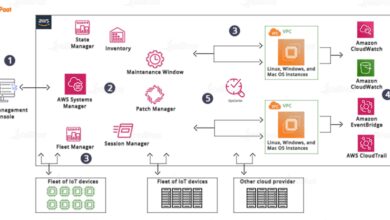
Ever wondered how massive tech platforms like Google or Netflix stay up and running flawlessly? It all starts with a solid system architecture. This behind-the-scenes blueprint shapes how software, hardware, and networks interact to deliver powerful digital experiences.
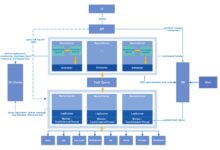




What Is System Architecture and Why It Matters

At its core, system architecture is the high-level structure of a software system. It defines how different components—like servers, databases, APIs, and user interfaces—work together to meet functional and non-functional requirements. Think of it as the architectural plan of a skyscraper: without a solid foundation and clear design, the building won’t stand.
Defining System Architecture
System architecture is more than just diagrams and flowcharts. It’s a strategic discipline that involves making critical decisions about technology stacks, data flow, scalability, security, and performance. According to the ISO/IEC/IEEE 42010 standard, architecture encompasses the fundamental concepts or properties of a system in its environment, embodied in its elements, relationships, and principles of design and evolution.
- It provides a shared understanding among stakeholders.
- It guides development, integration, and maintenance.
- It ensures alignment with business goals and technical constraints.
Key Components of System Architecture
A well-defined system architecture typically includes several core components:
Hardware Infrastructure: Physical or virtual servers, storage systems, and networking equipment.Software Layers: Operating systems, middleware, application logic, and user interfaces.Data Management: Databases, data lakes, caching layers, and data pipelines.Communication Protocols: APIs (REST, GraphQL, gRPC), message queues (Kafka, RabbitMQ), and service discovery mechanisms.Security Frameworks: Authentication, authorization, encryption, and auditing layers.
.”Good system architecture is invisible.When it’s done right, users don’t notice it—but they feel its impact through speed, reliability, and ease of use.” — Martin Fowler, Chief Scientist at ThoughtWorks
The Evolution of System Architecture Over Time
System architecture hasn’t remained static.It has evolved dramatically in response to technological advancements, user demands, and business needs.From monolithic mainframes to cloud-native microservices, the journey reflects a continuous pursuit of efficiency, scalability, and resilience..
From Monolithic to Modular: A Historical Shift
In the 1960s and 70s, system architecture was dominated by monolithic designs. Applications were built as single, tightly coupled units running on mainframes. While reliable, these systems were difficult to scale and update.
By the 1990s, client-server models emerged, separating presentation logic (client) from business logic (server). This allowed for better resource distribution and laid the groundwork for distributed computing.
The real transformation began in the 2000s with the rise of service-oriented architecture (SOA), where applications were broken into reusable services communicating via standardized protocols.
The Rise of Cloud and Microservices
The advent of cloud computing platforms like Amazon Web Services (AWS) revolutionized system architecture. Suddenly, organizations could deploy scalable, on-demand infrastructure without massive upfront investments.
This paved the way for microservices architecture—a design where an application is composed of small, independent services that communicate over well-defined APIs. Companies like Netflix and Uber adopted this model to achieve unprecedented agility and fault tolerance.
- Microservices enable independent deployment and scaling.
- They allow teams to use different tech stacks for different services.
- They improve resilience—failure in one service doesn’t bring down the entire system.
Core Principles of Effective System Architecture
Designing a robust system architecture isn’t just about choosing the right tools. It’s about adhering to time-tested principles that ensure long-term success. These principles act as guardrails, guiding architects through complex trade-offs.
Scalability: Building for Growth
Scalability refers to a system’s ability to handle increased load—whether more users, transactions, or data—without degradation in performance. There are two types:
- Vertical Scaling (Scaling Up): Adding more power (CPU, RAM) to an existing machine.
- Horizontal Scaling (Scaling Out): Adding more machines to distribute the load.
Modern system architecture favors horizontal scaling due to its flexibility and cost-effectiveness. Technologies like Kubernetes and Docker make it easier to manage containerized applications across clusters.
Reliability and Fault Tolerance
A reliable system remains operational even when parts fail. This is achieved through redundancy, failover mechanisms, and automated recovery processes.
For example, in a distributed database setup, data is replicated across multiple nodes. If one node goes down, others can take over seamlessly. Google’s Spanner database exemplifies this with its global consistency and fault-tolerant design.
- Use circuit breakers to prevent cascading failures.
- Implement health checks and auto-healing systems.
- Design for graceful degradation under stress.
Security by Design
Security shouldn’t be an afterthought. In modern system architecture, it must be embedded from the ground up. This includes:
- Zero-trust security models.
- End-to-end encryption (TLS, HTTPS).
- Role-based access control (RBAC) and multi-factor authentication (MFA).
- Regular vulnerability scanning and penetration testing.
The OWASP Top Ten project provides a comprehensive list of common security risks in web applications, which architects must address during design.
Common Types of System Architecture Patterns
There’s no one-size-fits-all solution in system architecture. Different patterns suit different use cases. Understanding these patterns helps architects choose the best fit for their project’s goals and constraints.
Monolithic Architecture
In a monolithic architecture, all components of an application are packaged together as a single unit. This includes the UI, business logic, and data access layers.
Advantages:
- Simpler to develop and deploy initially.
- Easier debugging due to centralized codebase.
- Better performance for small-scale applications.
Disadvantages:
- Hard to scale individual components.
- Longer deployment cycles as the entire app must be redeployed.
- High risk of single point of failure.
This pattern works well for startups or small projects but becomes unwieldy as complexity grows.
Microservices Architecture
As mentioned earlier, microservices break an application into small, loosely coupled services. Each service owns its data and logic and can be developed, deployed, and scaled independently.
Key benefits:
- Independent deployment pipelines.
- Technology diversity per service.
- Better fault isolation.
Challenges include:
- Increased operational complexity.
- Need for robust monitoring and logging.
- Inter-service communication overhead.
Netflix’s transition from a monolith to microservices allowed them to handle over a billion calls per day across hundreds of services.
Event-Driven Architecture
In event-driven architecture (EDA), components communicate through events—notifications that something meaningful has occurred. This decouples producers and consumers, enabling asynchronous processing.
For example, when a user places an order, an “OrderPlaced” event is published. Other services—like inventory, billing, and shipping—listen for this event and react accordingly.
- High responsiveness and real-time processing.
- Loose coupling between components.
- Suitable for complex workflows and IoT systems.
Tools like Apache Kafka and AWS Lambda are commonly used in EDA implementations.
How to Design a Scalable System Architecture
Designing a scalable system architecture requires a structured approach. It’s not just about throwing more servers at the problem—it’s about smart design choices that anticipate growth.
Step 1: Define Requirements and Constraints
Before writing a single line of code, gather functional and non-functional requirements:
- What features must the system support?
- What is the expected user load? (e.g., 10K concurrent users)
- What are the latency and availability targets? (e.g., 99.99% uptime)
- Are there regulatory or compliance needs? (e.g., GDPR, HIPAA)
These inputs shape the entire architecture.
Step 2: Choose the Right Data Storage
Data is the lifeblood of any system. The choice between SQL and NoSQL depends on the use case:
- Relational Databases (PostgreSQL, MySQL): Best for structured data with complex relationships and ACID transactions.
- NoSQL Databases (MongoDB, Cassandra): Ideal for unstructured or semi-structured data, high write throughput, and horizontal scaling.
- Search Engines (Elasticsearch): For full-text search and analytics.
- Cache Layers (Redis, Memcached): To reduce database load and improve response times.
Many modern systems use a polyglot persistence model—employing multiple storage technologies based on data needs.
Step 3: Design for High Availability
High availability means minimizing downtime. This is achieved through:
- Redundant components across multiple availability zones.
- Load balancers to distribute traffic evenly.
- Automated failover and self-healing mechanisms.
For instance, AWS offers multi-AZ RDS deployments where a standby database is automatically promoted if the primary fails.
The Role of DevOps and CI/CD in System Architecture
Modern system architecture doesn’t exist in isolation from development and operations. DevOps practices and continuous integration/continuous deployment (CI/CD) pipelines are integral to maintaining agility and reliability.
Integrating DevOps into Architecture Design
DevOps bridges the gap between development and operations teams. In system architecture, this means designing systems that are not only functional but also observable, maintainable, and automatable.
Key considerations:
- Infrastructure as Code (IaC) using tools like Terraform or AWS CloudFormation.
- Automated testing and deployment workflows.
- Centralized logging and monitoring (e.g., Prometheus, Grafana, ELK Stack).
By treating infrastructure as code, teams can version-control their architecture, enabling reproducible environments and faster recovery from failures.
CI/CD Pipelines and System Evolution
A well-designed CI/CD pipeline allows for rapid, safe iterations. Every code change triggers automated builds, tests, and deployments—reducing human error and accelerating delivery.
In a microservices context, each service can have its own CI/CD pipeline, enabling independent release cycles. This supports the principle of loose coupling and high cohesion.
- Use blue-green deployments or canary releases to minimize risk.
- Implement feature flags to control rollout.
- Monitor performance metrics post-deployment to detect regressions.
Companies like Spotify use CI/CD extensively to deploy thousands of times per day across their ecosystem.
Emerging Trends Shaping the Future of System Architecture
The field of system architecture is constantly evolving. New technologies and paradigms are redefining what’s possible, pushing the boundaries of performance, scalability, and intelligence.
Serverless and Function-as-a-Service (FaaS)
Serverless computing, such as AWS Lambda or Azure Functions, allows developers to run code without managing servers. The cloud provider handles scaling, patching, and infrastructure management.
Benefits:
- Pay-per-execution pricing model.
- Automatic scaling to zero when idle.
- Faster time-to-market.
Challenges include cold starts, limited execution duration, and vendor lock-in. However, for event-driven workloads, serverless is a game-changer.
Edge Computing and Distributed Architectures
Instead of processing data in centralized data centers, edge computing brings computation closer to the data source—like IoT devices, smartphones, or local gateways.
This reduces latency and bandwidth usage, critical for applications like autonomous vehicles, augmented reality, and real-time analytics.
For example, AWS Greengrass and Azure IoT Edge enable local processing while maintaining cloud connectivity for management and synchronization.
AI-Driven Architecture Optimization
Artificial intelligence is now being used to optimize system architecture itself. AI-powered tools can analyze traffic patterns, predict load spikes, and automatically adjust resource allocation.
Google’s Borg system uses machine learning to schedule workloads efficiently across data centers, improving utilization and reducing costs.
In the future, we may see self-healing, self-scaling systems that adapt in real-time to changing conditions—ushering in a new era of autonomous architecture.
Best Practices for Maintaining System Architecture Over Time
Building a great system architecture is only the beginning. Maintaining it over time—amid changing requirements, growing user bases, and evolving technologies—is equally critical.
Document Everything
Architecture decisions should be documented in an Architecture Decision Record (ADR). This captures the rationale behind key choices, making it easier for new team members to understand the system and avoid repeating past mistakes.
- Why was Kafka chosen over RabbitMQ?
- Why is the database sharded by region?
- What trade-offs were made for performance vs. consistency?
Monitor, Measure, and Iterate
Observability is key. Implement comprehensive monitoring using metrics, logs, and traces. Tools like OpenTelemetry, Datadog, and New Relic help visualize system behavior.
Set up alerts for anomalies and conduct regular performance reviews. Use feedback loops to refine the architecture continuously.
Plan for Technical Debt
No system is perfect. Shortcuts taken during development accumulate as technical debt. A healthy architecture includes time for refactoring, upgrades, and paying down debt.
Regular architecture reviews and retrospectives help identify areas for improvement before they become critical issues.
What is system architecture?
System architecture is the conceptual structure and functional organization of a system. It defines how components interact, the technologies used, and the principles guiding design and evolution. It serves as a blueprint for building and maintaining complex software systems.
Why is system architecture important?
It ensures that a system meets performance, scalability, security, and reliability requirements. A well-designed architecture reduces development costs, accelerates time-to-market, and supports long-term maintainability.
What are the main types of system architecture?
The main types include monolithic, microservices, event-driven, serverless, and service-oriented architectures (SOA). Each has its own strengths and is suited to different use cases.
How do you choose the right architecture for your project?
Consider factors like team size, expected scale, budget, regulatory needs, and long-term goals. Start simple (e.g., monolith) if you’re a startup, and evolve toward more complex patterns (e.g., microservices) as needed.
What tools are used in system architecture design?
Common tools include UML diagrams, C4 model for visualization, architecture decision records (ADRs), and modeling tools like Lucidchart or Draw.io. For implementation, cloud platforms (AWS, Azure), container orchestration (Kubernetes), and CI/CD tools (Jenkins, GitLab CI) are widely used.
System architecture is the backbone of every successful software system. From defining core components to choosing the right patterns and embracing emerging trends, it requires a blend of technical depth and strategic foresight. Whether you’re building a small app or a global platform, investing in a solid architecture pays dividends in performance, scalability, and long-term sustainability. As technology evolves, so too must our approach—embracing automation, intelligence, and decentralization to build systems that are not just functional, but future-proof.
Further Reading: