Ever wondered what truly powers your computer? It’s not just the processor or RAM—it all starts with the system board. This unsung hero connects every component, making it the backbone of any computing device. Let’s dive deep into what makes it so crucial.

What Is a System Board?

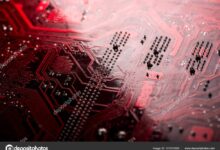
The term system board might sound technical, but it’s actually the central hub inside your computer. Also commonly known as the motherboard, it’s the primary printed circuit board (PCB) that connects and allows communication between all hardware components in a computing system. Without it, your CPU, RAM, storage drives, and peripherals wouldn’t be able to work together.
Definition and Core Function
The system board is the foundational platform upon which all other computer components are built. It provides electrical connections through traces—thin copper pathways on the board—that allow data and power to flow between the CPU, memory, expansion cards, and input/output devices. Think of it as the nervous system of a computer: without it, no signals can be sent or received.
- Acts as the central communication hub for all hardware
- Distributes power from the PSU to components
- Houses critical chips like the BIOS/UEFI firmware
According to Intel’s guide on motherboards, the system board is essential for initializing hardware during boot-up and managing system settings.
Common Synonyms and Terminology
While “system board” is the technically accurate term used in engineering and industrial contexts, it’s often referred to by other names depending on the device or industry. The most common synonym is motherboard, typically used in consumer PCs. In laptops and compact devices, it may be called a mainboard or logic board, especially by manufacturers like Apple.
- Motherboard: Most common in desktop computing
- Mainboard: Used interchangeably, especially in European markets
- Logic board: Common in Apple products (e.g., MacBook logic board)
“The system board is the single most important component in a computer system—everything else depends on it.” — TechTarget, IT Encyclopedia
Historical Evolution of the System Board
The journey of the system board mirrors the evolution of computing itself. From massive vacuum tube-based systems to today’s ultra-compact, high-speed boards, the transformation has been nothing short of revolutionary. Understanding this history helps appreciate how far technology has come and where it might be headed.
Early Computing and Mainframes
In the 1940s and 1950s, computers didn’t have system boards as we know them. Instead, they used large racks filled with discrete components like vacuum tubes, relays, and resistors. These early machines, such as the ENIAC, occupied entire rooms and required manual rewiring to change functions. There was no integrated circuitry—just wires and switches.
By the 1960s,随着 the advent of transistors and integrated circuits, engineers began consolidating components onto single boards. This marked the beginning of the modern system board concept. IBM’s System/360 series, introduced in 1964, was one of the first to use modular circuit boards that could be replaced individually, laying the groundwork for standardized designs.
The Rise of Personal Computers
The 1970s and 1980s saw the birth of the personal computer era, and with it, the standardization of the system board. The IBM PC, launched in 1981, featured a motherboard with expansion slots, a CPU socket, and support for RAM and storage. This design became the blueprint for future PCs.
- Introduction of the AT (Advanced Technology) motherboard in 1984
- Adoption of standardized form factors like ATX in the 1990s
- Integration of onboard audio, video, and networking in the 2000s
As documented by the Computer History Museum, the IBM PC’s open architecture allowed third-party manufacturers to create compatible system boards, fueling rapid innovation and market growth.
Key Components of a System Board
A system board is more than just a flat piece of green plastic with chips on it. It’s a complex ecosystem of interdependent components, each playing a vital role in the computer’s operation. Understanding these parts helps in troubleshooting, upgrading, and building custom systems.
CPU Socket and Chipset
The CPU socket is the physical interface where the processor is installed. It must match the type of CPU you’re using—Intel and AMD use different sockets, and even within brands, sockets change with new generations. For example, Intel’s LGA1700 supports 12th to 14th Gen Core processors, while AMD’s AM5 is designed for Ryzen 7000 series and beyond.
The chipset, usually located near the CPU, acts as a traffic controller. It manages data flow between the CPU, RAM, storage, and peripherals. Modern chipsets like Intel’s Z790 or AMD’s X670 support features such as PCIe 5.0, USB4, and overclocking.
- Determines CPU compatibility
- Controls I/O capabilities and expansion options
- Impacts overall system performance and upgrade potential
RAM Slots and Memory Controllers
Random Access Memory (RAM) slots are where memory modules are inserted. Most modern system boards have 2 to 4 DIMM slots supporting DDR4 or DDR5 memory. The number of slots and supported memory type directly affect multitasking performance and future scalability.
The memory controller, now integrated into the CPU (since the advent of AMD’s Ryzen and Intel’s Core i-series), communicates with the RAM via the system board’s traces. However, the board still plays a crucial role in signal integrity and timing.
- Supports dual-channel or quad-channel memory configurations
- Limits maximum RAM capacity and speed
- Must be compatible with CPU’s memory controller
Expansion Slots and Connectors
Expansion slots allow you to add functionality to your system. The most common type is the PCI Express (PCIe) slot, used for graphics cards, NVMe SSDs, and Wi-Fi adapters. PCIe slots come in different sizes (x1, x4, x8, x16) and generations (3.0, 4.0, 5.0), with higher numbers indicating greater bandwidth.
Other connectors include SATA ports for hard drives and SSDs, M.2 slots for compact storage, and front panel headers for connecting case buttons and LEDs.
- PCIe x16 for high-performance GPUs
- M.2 slots for ultra-fast NVMe drives
- SATA III ports for legacy storage devices
“Choosing the right system board means ensuring it has enough expansion slots for your current and future needs.” — Tom’s Hardware
Types of System Boards by Form Factor
Not all system boards are created equal—literally. They come in various sizes and layouts known as form factors. These determine the board’s physical dimensions, mounting points, power requirements, and compatibility with computer cases. Selecting the right form factor is crucial for building or upgrading a system.
ATX and Its Variants
ATX (Advanced Technology eXtended) is the most common form factor for desktop computers. Introduced by Intel in 1995, it measures 12 x 9.6 inches (305 x 244 mm) and offers a balanced layout with multiple expansion slots, RAM slots, and I/O ports.
Variants include:
- Micro-ATX (mATX): Smaller (9.6 x 9.6 inches), with fewer expansion slots but still compatible with ATX cases
- FlexATX: Even smaller, used in compact systems
- Extended ATX (EATX): Larger than standard ATX, used in high-end workstations and servers
ATX remains popular due to its flexibility and widespread support. More details can be found at the Form Factors website, which outlines official specifications.
Mini-ITX and Small Form Factors
Mini-ITX, measuring just 6.7 x 6.7 inches (170 x 170 mm), is ideal for compact builds like home theater PCs (HTPCs) or portable gaming rigs. Despite its size, it supports full-sized CPUs and RAM, though expansion is limited to one PCIe slot.
Other small form factors include:
- Nano-ITX: 4.7 x 4.7 inches, used in embedded systems
- Pico-ITX: 3.9 x 2.8 inches, for ultra-compact devices
- Thin Mini-ITX: Designed for slim cases with low-profile cooling
These are often used in industrial applications, digital signage, and kiosks where space is limited.
Server and Embedded System Boards
In enterprise environments, system boards are designed for reliability, scalability, and remote management. Server motherboards often support multiple CPUs, ECC (Error-Correcting Code) memory, and redundant power supplies.
- Support for dual or quad CPU sockets
- Advanced RAID and network controller integration
- IPMI (Intelligent Platform Management Interface) for remote monitoring
Embedded system boards, like those from companies such as Advantech or Kontron, are built for specialized applications—think medical devices, automotive systems, or industrial automation. They prioritize longevity, stability, and resistance to harsh environments over raw performance.
How a System Board Works: The Communication Backbone
At its core, the system board is a communication network. It doesn’t process data like the CPU or store it like the SSD—it enables everything else to do their jobs by providing pathways for data and power. Understanding how it manages this flow is key to appreciating its importance.
Data Pathways and Buses
Data travels across the system board through electrical pathways called buses. These are physical traces on the PCB that connect components. The main types include:
- Front-Side Bus (FSB): Older systems used this to connect CPU and northbridge (now obsolete)
- Direct Media Interface (DMI): Intel’s link between CPU and chipset
- Infinity Fabric: AMD’s interconnect technology linking CPU cores and I/O die
- PCIe lanes: High-speed serial connections for GPUs and storage
Modern architectures have moved toward point-to-point interconnects rather than shared buses, reducing bottlenecks and improving efficiency.
Power Delivery and Voltage Regulation
The system board doesn’t generate power—it distributes it. The Power Supply Unit (PSU) delivers electricity, which the board then routes to the CPU, RAM, and peripherals through voltage regulator modules (VRMs). VRMs are critical for converting 12V from the PSU into the precise voltages needed by the CPU (often below 1.5V).
A high-quality VRM design ensures stable power delivery, especially under heavy loads or during overclocking. Poor VRMs can lead to system instability, crashes, or even hardware damage.
- VRMs consist of MOSFETs, chokes, and capacitors
- More phases in a VRM mean better power distribution and cooling
- High-end boards feature 12+2 phase or 16+1 phase VRMs
BIOS/UEFI Firmware and Boot Process
The BIOS (Basic Input/Output System) or its modern successor, UEFI (Unified Extensible Firmware Interface), is stored in a small chip on the system board. It’s the first software to run when you power on your computer.
The boot process follows these steps:
- Power-on self-test (POST) checks hardware integrity
- BIOS/UEFI initializes CPU, RAM, and storage
- Looks for a bootable device (SSD, USB, etc.)
- Hands control over to the operating system
UEFI offers significant improvements over legacy BIOS, including faster boot times, support for drives larger than 2TB, and a graphical interface. You can learn more about UEFI at UEFI.org.
“The system board’s firmware is the gatekeeper of your computer’s startup process.” — PCMag
Choosing the Right System Board for Your Needs
Selecting a system board isn’t just about fitting it into your case—it’s about ensuring compatibility, performance, and future-proofing. Whether you’re building a gaming rig, a workstation, or a compact HTPC, the right choice can make or break your system.
Compatibility with CPU and RAM
The most critical factor is CPU socket compatibility. An Intel Core i7 won’t fit on an AMD AM4 board, and even within the same brand, sockets change. Always verify that your chosen system board supports your CPU generation.
Similarly, RAM compatibility matters. DDR4 and DDR5 are not interchangeable. Check the board’s QVL (Qualified Vendor List) to ensure your memory modules are supported.
- Use tools like Intel’s ARK or AMD’s Product Database to match CPUs and boards
- Confirm RAM speed and capacity limits (e.g., 64GB DDR5-6000)
- Ensure BIOS is updated for new CPU support
Expansion and Connectivity Options
Think about what you want to add later. Do you plan to install a second GPU? Need multiple NVMe drives? Want Wi-Fi 6E or Bluetooth 5.3?
Look for:
- At least one PCIe 4.0/5.0 x16 slot for GPU
- Multiple M.2 slots with PCIe 4.0 support
- USB 3.2 Gen 2×2 (20Gbps) ports
- 2.5GbE or 10GbE Ethernet for fast networking
High-end boards like the ASUS ROG Maximus series or MSI MEG Z790 Ace offer extensive connectivity for enthusiasts.
Budget vs. Performance Trade-offs
You don’t always need the most expensive board. Entry-level models like the MSI B660M-A or ASRock B550M-HDV offer solid performance for budget builds. They may lack overclocking support or premium audio, but they get the job done.
Ask yourself:
- Do I need to overclock my CPU?
- Will I use multiple GPUs or high-speed storage?
- Do I value advanced features like Wi-Fi, RGB lighting, or AI noise cancellation?
If not, a mid-range board is likely sufficient. Over-investing in a system board with features you won’t use is a common mistake.
Troubleshooting and Maintenance of System Boards
Even the most reliable system board can encounter issues. From boot failures to intermittent connectivity, problems can stem from hardware faults, firmware bugs, or environmental factors. Knowing how to diagnose and fix them can save time and money.
Common System Board Failures
Some of the most frequent issues include:
- No power or POST: Could be faulty PSU, damaged VRMs, or short circuits
- Random reboots or crashes: Often due to overheating VRMs or unstable BIOS settings
- USB or SATA ports not working: May indicate damaged controllers or corrupted firmware
- BIOS corruption: Can prevent booting; often fixable via recovery mode
Physical damage from spills, static discharge, or poor case grounding can also cause permanent failure.
Diagnostic Tools and Methods
Use these steps to isolate issues:
- Check power connections and test with a known-good PSU
- Inspect for bulging capacitors or burnt components
- Reset CMOS to clear BIOS settings
- Update BIOS to the latest version
- Test with minimal hardware (CPU, one RAM stick, GPU)
Tools like POST (Power-On Self-Test) beep codes or diagnostic LEDs on high-end boards can pinpoint problems. For example, an ASUS board with Q-LED will light up red if RAM is faulty.
Preventive Maintenance Tips
Prevention is better than repair. Follow these best practices:
- Keep the system clean from dust using compressed air
- Ensure proper airflow and cooling
- Use a surge protector or UPS to guard against power spikes
- Avoid overclocking unless you have adequate cooling and knowledge
- Regularly update BIOS and drivers
“A well-maintained system board can last 10 years or more.” — Linus Tech Tips
Future Trends in System Board Technology
The system board is far from stagnant. As computing demands grow, so do the innovations in board design, materials, and integration. From AI-powered optimization to modular architectures, the future is shaping up to be both exciting and transformative.
Integration of AI and Smart Features
Modern system boards are becoming smarter. Brands like ASUS, MSI, and Gigabyte now include AI-driven features such as:
- AI overclocking that automatically tunes CPU and RAM settings
- AI cooling that adjusts fan curves based on system load
- AI noise cancellation for microphones and audio
These features use onboard processors and machine learning models to optimize performance and user experience without manual tweaking.
Sustainability and Eco-Friendly Designs
With growing environmental concerns, manufacturers are focusing on sustainability. This includes:
- Using recyclable materials in PCBs
- Reducing hazardous substances (RoHS compliance)
- Improving energy efficiency through better VRM designs
- Extending product lifespans with BIOS updates and long-term support
ASUS’s Eco Mode and MSI’s Green Power technology are examples of efforts to reduce power consumption during idle and low-load scenarios.
Modular and Upgradeable Architectures
The future may see more modular system boards. Concepts like Intel’s NUC (Next Unit of Computing) and Framework Laptop’s repairable design suggest a shift toward user-upgradeable components. Imagine swapping out the CPU or chipset module without replacing the entire board.
While still in early stages, this could reduce e-waste and make computing more accessible and customizable.
What is the difference between a system board and a motherboard?
There is no functional difference—the terms are used interchangeably. “System board” is a more technical or industrial term, while “motherboard” is commonly used in consumer contexts. Both refer to the main circuit board in a computer.
Can a system board be repaired if it fails?
Sometimes. Minor issues like BIOS corruption can be fixed via recovery. However, physical damage to traces, capacitors, or chipsets often requires professional repair or replacement. Most users opt to replace the board entirely.
How long does a system board last?
Typically 5–10 years, depending on usage, cooling, and power stability. High-quality boards with good VRMs and build quality can last even longer.
Does the system board affect gaming performance?
Indirectly. While it doesn’t process graphics, a good system board ensures stable power delivery, fast data transfer via PCIe, and proper cooling—factors that prevent bottlenecks and crashes during gaming.
Can I upgrade my system board without changing other components?
It depends. If the new board uses the same CPU socket and RAM type, you might reuse the CPU and memory. However, switching platforms (e.g., Intel to AMD) usually requires replacing the CPU and possibly the RAM.
In conclusion, the system board is the silent powerhouse behind every computer. From its historical roots in mainframes to its modern role in AI-driven PCs, it remains the central nervous system of digital devices. Whether you’re a casual user or a tech enthusiast, understanding its components, functions, and future trends empowers you to make smarter decisions about your hardware. Choose wisely, maintain it well, and it will serve you reliably for years to come.
Further Reading: